There are music festivals built around convenience, polished branding, and interchangeable open fields, and then there is Inkcarceration.
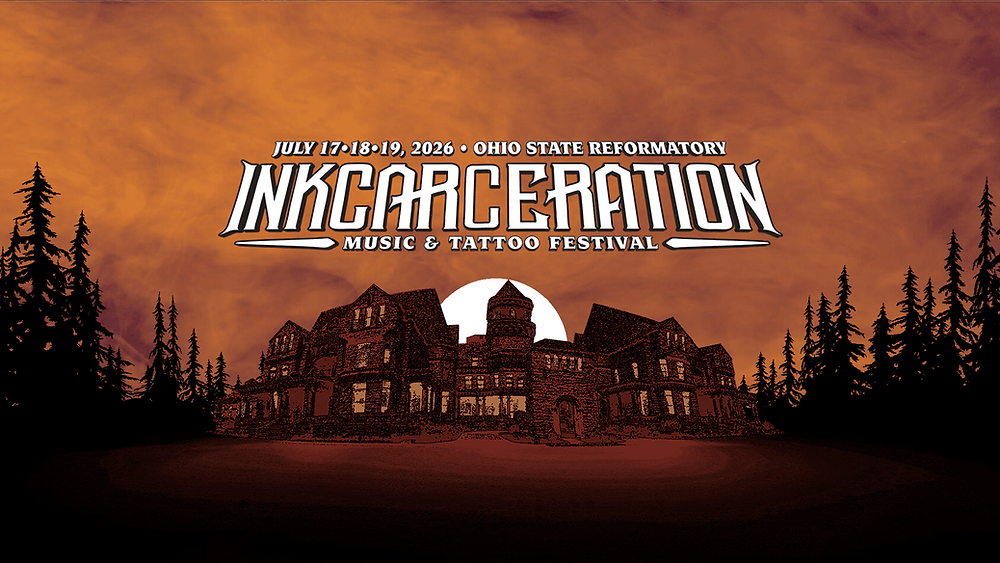
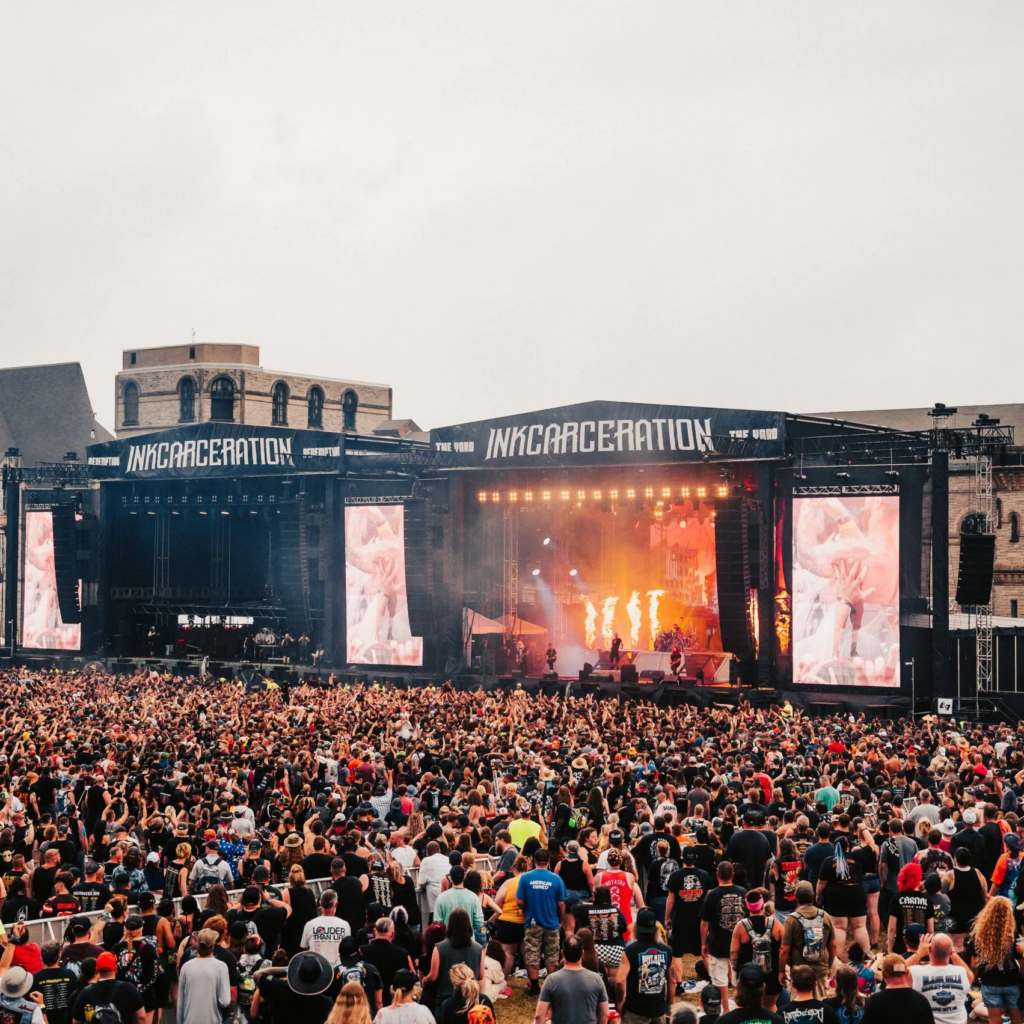
Few live music events anywhere in the world can match the sheer atmosphere, mythology, visual power, and immersive intensity surrounding Inkcarceration Music & Tattoo Festival, the annual summer gathering that transforms the historic Ohio State Reformatory in Mansfield, Ohio into one of the most surreal heavy music environments ever assembled. Returning July 17 through July 19, Inkcarceration 2026 once again promises to merge massive rock and metal performances with horror culture, tattoo artistry, paranormal legend, cinematic history, and one of the most visually imposing structures in the United States.
The result is not simply another festival weekend.
It feels more like stepping directly into a dystopian movie set where heavy music becomes the soundtrack to an entire living environment built around abandoned prison walls, gothic stone towers, six-story steel cellblocks, underground folklore, and decades of real American history. Every inch of the grounds carries weight. Every corridor feels cinematic. Every stage backdrop appears intentionally designed for aggressive music even though the location existed long before anyone imagined a modern rock festival operating there.
The Ohio State Reformatory is not just another venue attached to a festival brand. It is the identity of Inkcarceration itself.
Built in the late nineteenth century with towering Romanesque Revival architecture, the structure rises from the Mansfield landscape like a giant medieval fortress carved from stone and shadow. Massive gothic windows, iron gates, narrow corridors, decaying interiors, and looming prison towers create an atmosphere unlike any other music venue in America. The building’s presence alone changes the emotional tone of the entire festival experience before a single band even steps onstage.
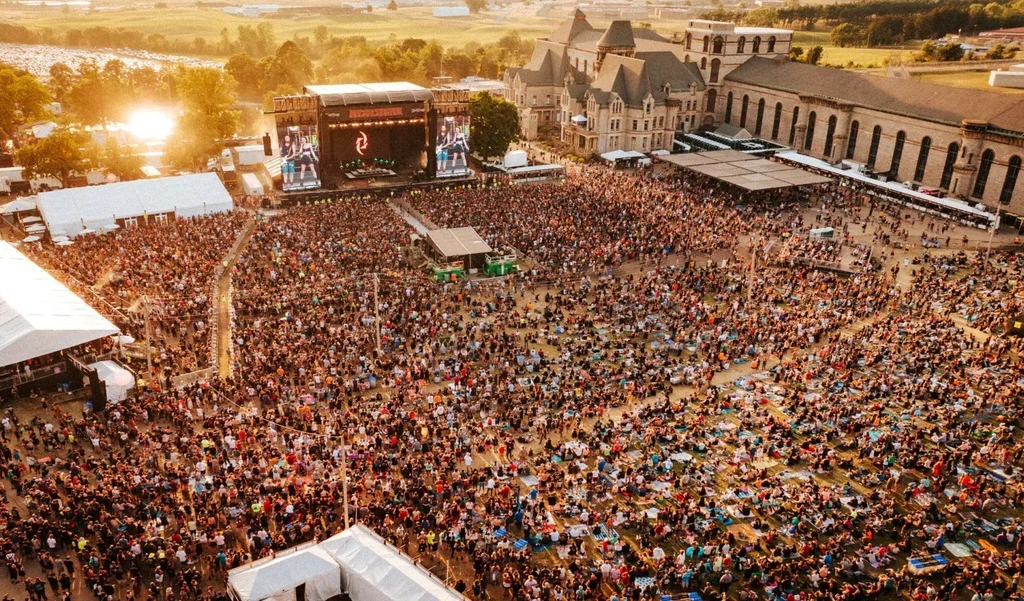
For many attendees, the first reaction upon arrival is disbelief at the sheer scale of the prison itself.
That reaction only intensifies once fans realize they are not simply attending concerts outside the facility. Their festival access allows them to actively move through large portions of the prison interior throughout the weekend. Unlike traditional festivals where VIP upgrades or backstage packages create artificial exclusivity, Inkcarceration transforms the entire prison into part of the immersive environment. Fans wander through cellblocks between sets, explore abandoned administrative rooms, visit historical exhibits, examine movie props, and even schedule tattoo appointments directly inside the former prison walls.
That combination of freedom and atmosphere makes Inkcarceration feel radically different from almost every other American rock festival.
The location’s connection to Hollywood history only deepens the mythology.
The Ohio State Reformatory achieved worldwide recognition after serving as the primary filming location for the legendary 1994 film The Shawshank Redemption, widely considered one of the greatest films ever made. Although the original Stephen King novella Rita Hayworth and Shawshank Redemption was set in a fictional Maine prison, filmmakers selected the Mansfield structure because of its haunting, gothic appearance and enormous cinematic presence.
That decision permanently transformed the prison into a global pop-culture landmark.
Today, Inkcarceration attendees can literally walk through some of the most recognizable locations from the film itself. Fans step into the Warden’s office, move through the same hallways featured throughout the movie, and stand inside the rooms connected to characters like Andy Dufresne, Brooks, and Red. One of the most surreal aspects of the entire festival experience is the ability to move from watching a metal band outside in the prison yard to standing moments later inside one of the most famous cinematic prison settings in movie history.
That collision between heavy music culture and Hollywood mythology creates a festival atmosphere unlike anything else in the country.
The prison’s enormous six-tier free-standing steel cellblock adds another layer to the experience. Considered the largest of its kind in the world, the towering structure stretches upward with endless rows of iron-barred cells stacked toward the ceiling in claustrophobic symmetry. During Inkcarceration weekends, the sound of music, crowd noise, distant bass frequencies, tattoo machines, and thousands of moving fans echoes through the steel structure in ways that feel almost unreal.
Standing at the bottom of the cellblock while live rock music shakes the grounds outside creates one of the most distinctive sensory experiences in the modern festival world.
But the prison’s history extends far beyond architecture and cinema.
Long before it became a music destination, the Ohio State Reformatory carried a grim and deeply disturbing past. Before closing in 1990 due to severe overcrowding and inhumane conditions, the prison housed more than 154,000 inmates across its operational history. Hundreds died inside the facility over the decades, contributing to the building’s reputation as one of the most haunted locations in the United States.
That paranormal reputation has become fully integrated into the Inkcarceration identity.
Throughout the festival weekend, the prison operates its infamous Blood Prison experience, an immersive haunted attraction built directly inside the original cellblocks and solitary confinement areas. Unlike manufactured haunted-house experiences created inside amusement parks or temporary attractions, Blood Prison uses the actual prison infrastructure itself. The realism becomes unavoidable because nothing about the environment needs artificial enhancement. The darkness, isolation, narrow hallways, decaying architecture, and psychological atmosphere already exist naturally within the building.
Festival attendees routinely report eerie experiences while moving through the upper prison tiers between performances. Stories of phantom footsteps, slamming cell doors, cold air pockets, distant voices, and unexplained sensations circulate constantly throughout the weekend. Whether visitors believe in paranormal activity or not, the prison’s atmosphere creates an undeniable psychological tension that becomes part of the festival’s identity.
The venue’s bizarre intersection between horror tourism and heavy music culture feels completely natural rather than forced.
That same immersive philosophy extends into the festival’s massive tattoo convention, Monster Energy Tattoo X, which remains one of the event’s defining features. While many festivals offer standard merchandise areas or sponsor activations, Inkcarceration transforms sections of the prison itself into a sprawling live tattoo environment where more than one hundred elite artists from around the world work throughout the weekend.
The concept alone sounds surreal.
Tattoo artists operating inside abandoned prison administration rooms and former inmate areas while heavy music echoes through the grounds creates a visual and cultural atmosphere unlike anything else in live entertainment. The sound of hundreds of tattoo machines reverberating through old stone corridors adds another layer to the already overwhelming sensory environment.
Many attendees arrive specifically planning to get tattooed during the festival itself, treating the experience almost like a rite of passage. Walk-up sessions, pre-booked appointments, custom flash artwork, and spontaneous designs all become part of the weekend culture. The entire environment feels alive twenty-four hours a day, with the prison constantly shifting between concert venue, horror attraction, movie set, tattoo convention, and historical landmark.
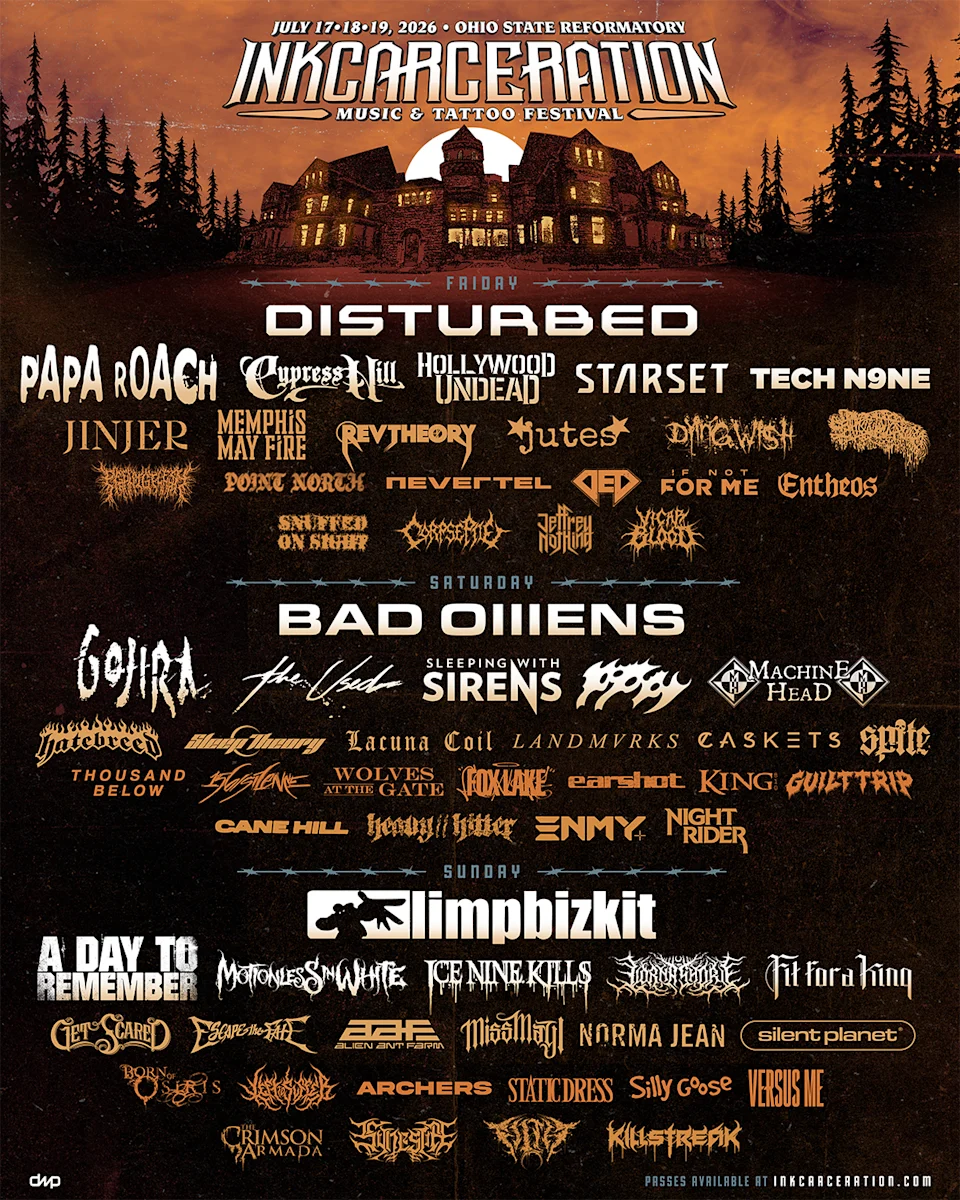
Musically, Inkcarceration 2026 continues building one of the strongest mainstream heavy music lineups of the summer festival season.
Friday night belongs to Limp Bizkit, whose return to major festival dominance continues accelerating across the live music landscape. Few bands generate the kind of volatile crowd energy Limp Bizkit still produces when songs like “Break Stuff,” “Rollin’,” and “My Way” hit festival speakers. Their placement closing the opening night virtually guarantees one of the most chaotic crowd reactions of the weekend.
Supporting acts that evening include Killswitch Engage, Hollywood Undead, The Ghost Inside, Seether, and From Ashes to New, creating a lineup deeply rooted in metalcore, alternative metal, and hard rock crossover energy.
Meanwhile, underground heaviness remains fully represented through acts like Fit For A King and Bleed From Within, both expected to trigger enormous pit activity throughout the secondary stages.
Saturday shifts toward progressive heaviness and modern metal spectacle with French metal giants Gojira taking over the main stage. Over the last several years, Gojira has evolved from cult progressive death metal innovators into one of the most respected and commercially successful heavy bands on the planet. Their environmentally charged themes, crushing technical precision, and massive live production make them uniquely suited for the overwhelming prison backdrop surrounding Inkcarceration.
Supporting them are artists including Halestorm, I Prevail, Bad Wolves, and Clutch, while the heavier stages continue delivering punishment through Filter and Fit For An Autopsy.
Sunday closes with arena rock powerhouse Shinedown delivering the festival finale alongside performances from Skillet, Asking Alexandria, P.O.D., Theory of a Deadman, and Sleeping With Sirens.
The weekend’s layout itself remains one of the festival’s most intelligently designed features.
Because the stages exist outdoors while the prison interior remains fully accessible, fans can move fluidly between live performances and indoor exploration without logistical frustration. One moment attendees are standing in massive outdoor crowds watching Gojira perform beneath towering prison walls. Minutes later, they can be wandering through air-conditioned cellblocks examining tattoo designs, film props, or historical exhibits before reemerging directly into another concert environment.
That “music versus prison loop,” as many returning fans describe it, has become central to Inkcarceration’s identity.
The festival also continues expanding infrastructure to handle crowds now exceeding 90,000 attendees across the weekend. Additional wooded viewing areas, upgraded production roads, shaded spaces, and elevated VIP platforms have all been integrated into the surrounding grounds while preserving the prison’s overwhelming visual dominance.
Yet perhaps the most bizarre and fascinating aspect of the Ohio State Reformatory story remains the real-life escape narrative that later mirrored the fictional mythology of Shawshank itself.
Decades before the prison became globally famous through film, inmate Frank Freshwaters escaped custody after being transferred to a lower-security honor farm outside the main prison complex. Unlike Andy Dufresne’s fictional tunnel escape, Freshwaters simply walked away and disappeared. He lived under an assumed identity for fifty-six years, working ordinary jobs and building a completely new life before U.S. Marshals finally located him in a Florida trailer park in 2015.
By then, the prison he escaped from had already become immortalized globally through The Shawshank Redemption, leading media outlets to dub him “The Real-Life Shawshank Fugitive.”
That bizarre overlap between fiction, history, crime, cinema, and mythology perfectly captures why Inkcarceration feels so different from any other heavy music event in America.
The festival exists at the crossroads of multiple cultural worlds simultaneously. Heavy metal collides with horror tourism. Tattoo culture merges with prison history. Hollywood mythology overlaps with real criminal history. Paranormal folklore exists alongside modern festival production. And through it all, thousands of fans gather beneath towering gothic prison walls to celebrate loud music, rebellion, creativity, and collective escape.
That same spirit of live heavy music history and legendary performance culture continues this week on MetalMania Live with Friday Night Metallica Live spotlighting Metallica in Gothenburg 1987.
The Gothenburg performance captures Metallica during one of the most ferocious and transitional periods of their career. Coming just after the explosive rise of Master of Puppets and during the early Jason Newsted era following the tragic loss of Cliff Burton, the 1987 performances showcased a band operating with something to prove every single night. The aggression was sharper, the pacing faster, and the intensity absolutely relentless as Metallica continued evolving from underground thrash heroes into global metal leaders.
The Gothenburg show stands as a remarkable snapshot of a young band still fueled by hunger, grief, chaos, and unstoppable momentum. That raw energy connects directly with the atmosphere surrounding Inkcarceration itself — environments where heavy music still feels dangerous, emotional, physical, and larger than life.
And in an era where many festivals increasingly feel interchangeable, sanitized, or overly corporate, Inkcarceration continues standing alone as one of the most immersive, visually unforgettable, and culturally distinct heavy music experiences in the world.