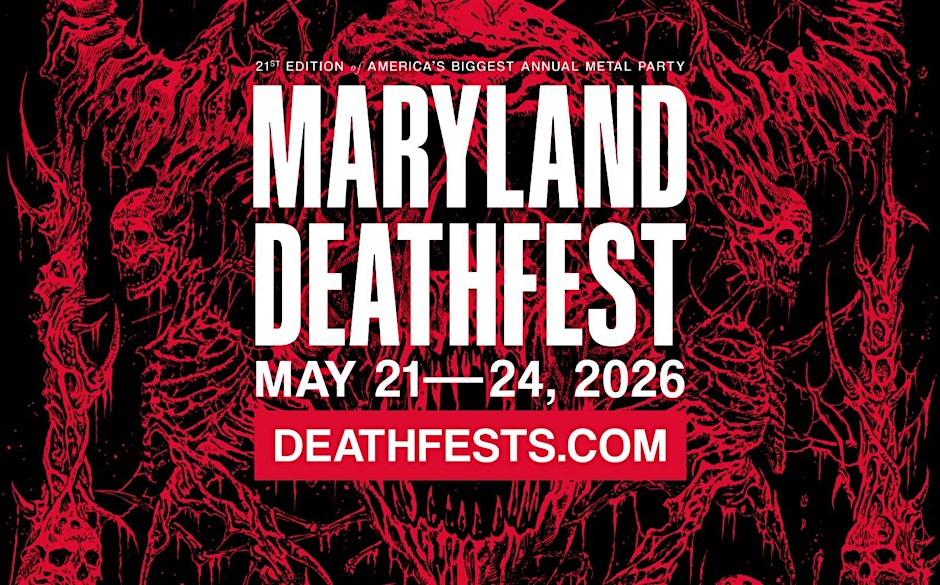
There are heavy metal festivals, and then there is Maryland Deathfest.
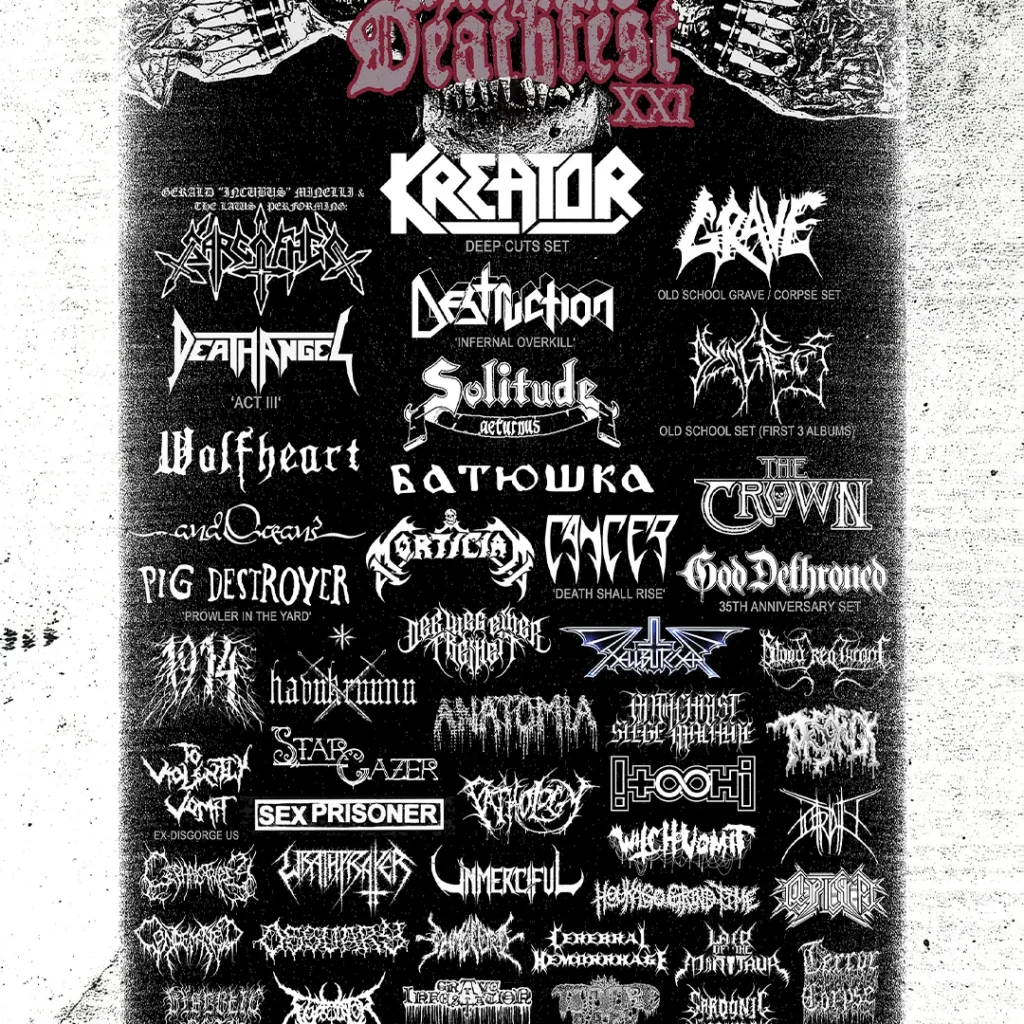
For nearly two decades, Maryland Deathfest has existed as something far larger than a conventional music gathering. It is a pilgrimage point for the global extreme metal underground. It is a living archive of death metal, grindcore, black metal, doom, crust, thrash, and avant-garde extremity. It is one of the last truly uncompromising large-scale metal festivals in the world — an event where underground credibility still matters more than trend cycles, algorithms, or commercial crossover appeal.
This week, beginning Thursday, May 21 and running through May 24 in Baltimore, Maryland, the festival returns once again with another crushing lineup designed to celebrate the entire spectrum of extreme music culture. From legendary pioneers to modern innovators, cult reunions to technical devastation, Maryland Deathfest 2026 arrives with the same identity it has protected since its earliest years: absolute devotion to underground heavy music in its purest and most punishing forms.
Even with last-minute turbulence caused by Australian progressive extreme metal outfit StarGazer withdrawing due to personal circumstances, the momentum surrounding the festival has not slowed in the slightest. If anything, the sudden schedule reshuffling only reinforces what longtime attendees already understand about Maryland Deathfest. The festival has never been about convenience, perfection, or corporate polish. It is about resilience, chaos, intensity, discovery, and the collective experience of extreme music fans gathering from every corner of the globe under one brutal banner.
That atmosphere begins the moment fans descend upon Baltimore.
Every year, the city transforms into one of the most unique musical environments in North America. Metalheads from Europe, South America, Scandinavia, Asia, Australia, and across the United States flood local venues, bars, record stores, restaurants, hotels, and streets surrounding the festival grounds. Rare shirts emerge from storage. Obscure demos become conversation pieces. Bands that normally exist only in niche online communities suddenly stand directly in front of thousands of dedicated fans who know every riff, every lyric, and every lineup change from decades of underground history.
Maryland Deathfest does not cater to casual listeners. That has always been its greatest strength.
The 2026 lineup once again proves why the festival maintains legendary status among serious heavy music fans. Thrash metal icons Vio-Lence return carrying the ferocity and technical aggression that helped shape Bay Area thrash into one of the most influential heavy music movements of all time. Their catalog remains foundational to generations of crossover thrash, death-thrash, and modern extreme metal musicians, and their live appearances continue feeling less like nostalgia and more like controlled demolition.
Alongside them stands modern thrash powerhouse Warbringer, one of the defining acts of the 21st-century thrash revival movement. Warbringer represents the bridge between classic aggression and modern precision, proving that thrash metal remains not only alive but creatively dangerous. Their performances consistently deliver the kind of violent pit energy that Maryland Deathfest audiences demand.
New York thrash veterans Whiplash further deepen the festival’s connection to old-school extremity. Their appearance reinforces MDF’s ongoing commitment to honoring foundational bands that helped create the underground infrastructure modern heavy music still depends upon.
Yet what truly separates Maryland Deathfest from many competing festivals is the astonishing stylistic breadth hidden beneath the umbrella of “extreme metal.”
This is not a one-dimensional event.
Swedish thrash and death metal institution Kreator remains one of the festival’s towering centerpieces, continuing a career that has influenced virtually every corner of modern aggressive music. Their ability to evolve from raw Teutonic thrash pioneers into globally respected extreme metal veterans speaks directly to the longevity and adaptability of truly great heavy bands.
Meanwhile, grindcore revolutionaries Napalm Death once again bring one of the most politically charged and sonically relentless live experiences in all of metal. Few bands maintain the cultural relevance, fury, and ideological conviction that Napalm Death still carries decades into their career. Their inclusion alone guarantees one of the weekend’s most explosive and cathartic crowd reactions.
Baltimore’s own Dying Fetus returns to its hometown festival with the kind of hometown dominance few bands in extreme metal can replicate. Over the years, Dying Fetus has become synonymous with technical brutality, precision riffing, and politically charged death metal intensity. Their performances at Maryland Deathfest often feel particularly meaningful because of the deep connection between the band and the city itself.
Then there are the cult legends whose presence transforms the festival into something bordering on mythical for longtime underground fans.
Brazilian black-thrash pioneers Sarcófago occupy sacred territory in extreme metal history. Their influence on black metal aesthetics, aggression, corpse paint imagery, and primitive extremity cannot be overstated. Simply having Sarcófago associated with the lineup reinforces Maryland Deathfest’s unmatched dedication to preserving underground metal lineage.
Finnish pagan black metal force Havukruunu brings atmospheric grandeur and folk-infused darkness to the weekend, while avant-garde psychedelic extremists Oranssi Pazuzu continue pushing black metal into abstract, hypnotic, and experimental territory few bands would dare attempt.
Meanwhile, doom, sludge, and stoner devastation arrives through the crushing low-end punishment of Bongripper and Bongzilla, whose monolithic riffs and suffocating sonic weight create an entirely different psychological experience within the festival environment.
The sheer diversity of sounds becomes one of Maryland Deathfest’s defining characteristics. Blackened atmosphere collides with old-school death metal. Grindcore chaos transitions into funeral doom misery. Technical brutality gives way to psychedelic experimentation. Fans move from blast-beat warfare to slow-motion riff worship sometimes within the same hour.
That unpredictability is exactly what makes the festival so important culturally.
Maryland Deathfest functions almost like a museum of global underground heavy music history operating in real time. Every stage becomes a different branch of the genre’s evolutionary tree. Older fans revisit eras that shaped their lives while younger listeners discover entire scenes they may have previously only encountered through streaming platforms, obscure blogs, or collector forums.
Bands like Rotting Christ and God Dethroned showcase the international nature of the modern underground. The extreme metal community has never been geographically limited, and Maryland Deathfest consistently reflects that reality better than almost any festival in North America.
Similarly, acts like 1914 bring historically driven conceptual depth into the lineup, combining blackened death metal with wartime themes and emotionally devastating atmosphere. Their inclusion highlights how far extreme metal has evolved artistically over the last several decades while still maintaining raw aggression at its core.
Elsewhere, cult doom legends Solitude Aeturnus, progressive death-grind innovators Cephalic Carnage, and underground horror-metal icons Macabre each bring their own distinct identities into the weekend’s sonic destruction.
The festival’s importance also extends beyond the bands themselves.
Maryland Deathfest remains one of the few remaining major events where underground record labels, independent merch artists, tape traders, vinyl collectors, and DIY culture still operate at the center of the experience rather than on the periphery. Rare pressings, obscure demos, exclusive merchandise, underground zines, and limited collectibles circulate through the festival ecosystem all weekend long. For many attendees, the event serves not only as a concert destination but as a yearly gathering point for the global underground community itself.
That authenticity becomes increasingly valuable in an era where many music festivals feel homogenized, corporately branded, and disconnected from the cultures that originally built them. Maryland Deathfest still feels dangerous in the best possible sense. It feels loud, sweaty, unpredictable, obsessive, and completely committed to the music first.
That same commitment to heavy music history and live intensity continues this week on MetalMania Live itself with the upcoming Friday Night Metallica Live special spotlighting Metallica at Pinkpop 2008.
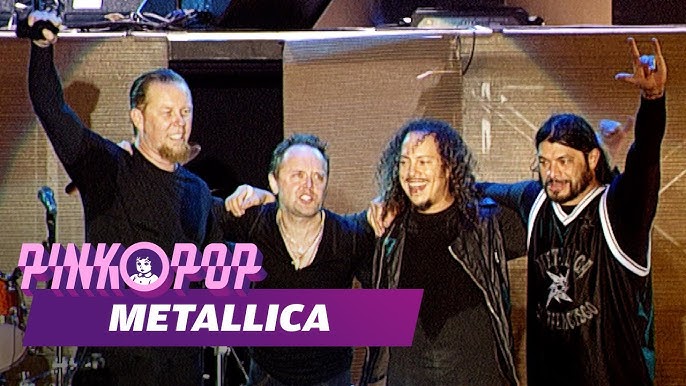
The Pinkpop performance captures Metallica during one of the most fascinating transitional periods of their modern career. Coming shortly before the release of Death Magnetic, the 2008 era showcased the band reconnecting with thrash aggression after years of stylistic experimentation and public turbulence. Fans attending those performances witnessed a renewed hunger in the band’s live attack, with classic material regaining sharper intensity while newer compositions hinted at a return toward faster, heavier territory.
The Pinkpop show in particular stands as a remarkable snapshot of Metallica operating before the full Death Magnetic campaign officially exploded worldwide. The setlist balance, crowd energy, and overall performance chemistry reflected a band rediscovering parts of its original identity while still carrying the massive arena command developed during the Black Album years and beyond.
For MetalMania Live listeners, the broadcast offers another deep dive into heavy metal history during a period where legacy bands were redefining themselves in real time — a theme that connects directly with Maryland Deathfest itself.
Because ultimately, that is what Maryland Deathfest continues representing better than almost any event on earth.
It is not simply nostalgia.
It is not merely extremity for shock value.
It is preservation, evolution, celebration, experimentation, and survival all happening simultaneously inside one of the most passionate underground communities in music culture. From legendary veterans to rising destroyers, from black metal mysticism to grindcore annihilation, Maryland Deathfest 2026 once again proves that extreme metal remains one of the most globally unified, artistically fearless, and emotionally committed movements in modern music.
And this week, Baltimore becomes its capital once again.