
In an era dominated by automation, digital production, artificial intelligence, and mass manufacturing, there remains something profoundly powerful about an object built by human hands. Nowhere is that truth more evident than in the world of electric guitars, where craftsmanship, artistry, and tradition continue to shape instruments that inspire musicians across generations. For more than half a century, some of the most recognizable guitars in music history have emerged from Nashville, Tennessee, where Gibson has quietly refined a process that combines old-world craftsmanship with modern innovation.
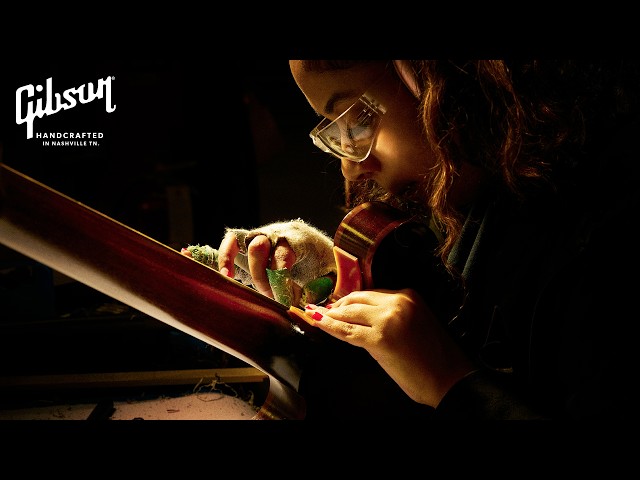
Now, the legendary guitar maker is opening the doors to that world in a deeply personal and visually ambitious new series that explores the journey of a guitar from its earliest beginnings to the moment it reaches the hands of a player. Through its Handcrafted in Nashville campaign, Gibson is inviting musicians and music fans alike to experience the stories, materials, and people that transform wood and steel into instruments capable of shaping culture itself.
The campaign begins with Chapter One, appropriately titled “Wood,” a cinematic exploration of the foundation upon which every Gibson electric guitar is built. Narrated by Corrosion of Conformity and Down guitarist and vocalist Pepper Keenan, the film serves as both a tribute to craftsmanship and a reminder that every legendary instrument begins its life long before the first note is ever played.
For many guitar players, the magic of an instrument begins when it is removed from a case, plugged into an amplifier, and brought to life through music. Gibson’s new series intentionally takes viewers much further back in the process. Long before a Les Paul, SG, or ES-335 reaches a stage, rehearsal room, recording studio, or living room, it begins in the forests that provide the raw materials essential to its identity.
That concept lies at the center of the opening chapter.
Every great Gibson guitar begins with wood. Not merely as a construction material, but as a living component that influences tone, resonance, sustain, appearance, and personality. For generations, guitarists have debated pickups, amplifiers, effects, and electronics, but experienced players understand that the soul of an instrument often starts with the materials from which it is crafted.
The new film explores that relationship in remarkable detail, focusing on the premium tonewoods that have become synonymous with Gibson’s most celebrated designs. Mahogany, maple, and other carefully selected woods form the sonic backbone of instruments that have helped define the sound of rock, blues, country, jazz, metal, and virtually every modern genre of popular music.
The story is particularly compelling because it reminds viewers that many of these materials begin their journey decades before they ever become part of a guitar. Trees that have spent generations growing naturally eventually become the raw foundation for instruments that may themselves last for generations to come. It is a perspective that shifts the conversation away from manufacturing and toward stewardship, patience, and respect for materials.
For Gibson, that commitment extends beyond craftsmanship into sustainability and responsible sourcing. The company continues emphasizing long-term relationships with trusted suppliers and responsible forestry practices designed to ensure that future generations of musicians will have access to the same quality materials that have helped define the brand’s instruments for more than a century.
That commitment to longevity is particularly meaningful when discussing Gibson guitars.
Unlike many consumer products designed with limited life cycles, a Gibson guitar is often purchased with the expectation that it will outlive its original owner. Some instruments become family heirlooms. Others spend decades traveling the world with touring musicians. Many become treasured studio tools that contribute to countless recordings over the course of a lifetime.
That sense of permanence is woven into every aspect of the Nashville manufacturing process.
Inside Gibson’s Nashville facilities, skilled artisans continue applying techniques that have evolved through generations of guitar building. While modern technology certainly plays a role, much of what defines a Gibson instrument still depends upon human experience, trained eyes, and practiced hands. Every grain pattern must be evaluated. Every carve requires precision. Every finish must meet exacting standards before an instrument leaves the factory.
The process is neither rushed nor simplified.
In many ways, that refusal to pursue shortcuts remains one of Gibson’s defining characteristics. While efficiency often dominates modern manufacturing conversations, Gibson continues emphasizing quality, consistency, and craftsmanship above speed. It is an approach that aligns closely with the philosophy established by founder Orville Gibson more than a century ago and one that continues shaping the company’s identity today.
Chapter One of the series highlights this philosophy beautifully through its examination of the specific woods associated with Gibson’s most iconic models.
The Les Paul remains perhaps the most famous example. Its combination of a solid mahogany body paired with a carved maple top has become one of the most celebrated formulas in electric guitar history. That pairing delivers a unique balance of warmth, sustain, articulation, and visual elegance that has helped define countless classic recordings.
Similarly, the SG relies heavily on the tonal characteristics of mahogany to achieve its signature voice. Lightweight, resonant, and aggressive when pushed through an amplifier, the SG became a favorite among players seeking a guitar capable of delivering both precision and power.
The ES-335 occupies its own unique space within the Gibson family, blending solid-body sustain with semi-hollow resonance to create one of the most versatile instruments ever produced. Its enduring popularity across genres serves as a testament to the effectiveness of Gibson’s material choices and design philosophy.
Throughout the film, Pepper Keenan provides a fitting voice for the story. Few musicians understand the relationship between instrument and expression as deeply as someone who has spent decades crafting heavy, emotionally resonant music. His narration helps frame the guitar not simply as an object but as a living extension of creativity.
That perspective becomes especially important when considering the broader purpose of the Handcrafted in Nashville campaign.
This is not merely a product showcase. It is an exploration of identity. It seeks to explain why musicians develop such powerful emotional connections to their instruments and why certain guitars remain meaningful long after trends, technologies, and musical movements have changed.
The answer, in many ways, lies in the people behind the instruments themselves.
Future chapters of the series promise to explore that relationship even further. Chapter Two, titled “Steel,” will shift attention toward the hardware, electronics, tooling, and engineering that bring a guitar’s voice to life. From pickup development to bridge construction, fretwork, tuning systems, and historical manufacturing tools, the chapter promises a fascinating look at the components that transform raw materials into functional instruments.
Chapter Three, “Heart,” moves even deeper into the human side of the process by spotlighting the craftspeople who build each instrument. Their experience, patience, and attention to detail often determine whether a guitar becomes merely good or truly exceptional. By focusing on the individuals behind the work, Gibson reinforces the idea that every instrument reflects the care and dedication of those who built it.
Finally, Chapter Four, “Soul,” completes the journey by following guitars into the hands of musicians around the world. This chapter may ultimately prove the most meaningful because it acknowledges a simple truth: no guitar becomes legendary inside a factory.
Its story begins there.
But its legacy is created elsewhere.
It happens in garages where young musicians learn their first chords. It happens in rehearsal rooms where bands discover their sound. It happens in clubs, theaters, arenas, recording studios, and festivals where songs are written, performed, and remembered. It happens whenever a player picks up an instrument and transforms craftsmanship into expression.
That journey from raw material to personal connection is what separates great guitars from ordinary products.
For heavy music fans, Gibson’s influence on that journey remains impossible to overstate. The company’s instruments helped shape the sound of hard rock, heavy metal, southern rock, blues, punk, and countless other genres. From the roaring sustain of a Les Paul through a wall of amplifiers to the cutting aggression of an SG driving a stadium crowd into a frenzy, Gibson guitars have become part of the foundation upon which modern heavy music was built.
Artists across generations have relied upon these instruments to create some of the most influential recordings in history. Their sounds have become intertwined with the evolution of rock and metal itself. In many cases, entire genres can trace portions of their sonic identity back to specific Gibson designs.
That enduring influence is why the Handcrafted in Nashville campaign feels particularly relevant in 2026.
At a time when musicians have access to endless digital tools and technological shortcuts, Gibson is reminding audiences that great instruments still begin with craftsmanship, materials, and people. The company is highlighting the value of patience, expertise, and tradition without dismissing innovation. It is celebrating a process that remains deeply human in a world increasingly defined by automation.
Ultimately, the story told in “Wood” is not really about trees, factories, or even guitars.
It is about connection.
The connection between nature and music. Between craftsmanship and creativity. Between generations of builders and generations of players. Between a piece of wood that spent a century growing in a forest and the musician who eventually uses it to create something entirely new.
That connection is the true legacy of Gibson.
And as the Handcrafted in Nashville series continues throughout 2026 and into 2027, it promises to offer one of the most compelling looks ever presented into the art, science, history, and humanity behind some of the most iconic instruments ever created.
For musicians, collectors, and fans of guitar culture, it is a reminder that every legendary instrument has a beginning.
And every great story starts long before the first note is played.